

If you own residential real estate in Bristol County, you already know that selling a tenant occupied house in Fall River presents a unique set of financial, legal, and operational hurdles. While multi-family properties—especially classic New England triple-deckers—can provide solid rental income during calm economic periods, managing them often devolves into a costly headache.
Whether you are struggling with non-paying tenants, facing severe city code violations, or simply exhausted by the relentless maintenance required for aging multi-family housing, navigating the traditional real estate market can feel overwhelming. Traditional buyers financing through conventional mortgages typically expect vacant homes in move-in condition. When a property comes with existing lease agreements, unpaid rent, or physical deferred maintenance, open-market home sales frequently stall out or fall through entirely.
This comprehensive guide breaks down the legal complexities, tenant dynamics, and practical strategies involved when selling a tenant-occupied house or distressed multi-family property in Fall River, MA.
The Reality of Owning Multi-Family Properties and Triple-Deckers in Fall River
Fall River’s architectural heritage is heavily defined by high-density multi-family housing, most notably the historic three-decker (or triple-decker). Built largely during the late 19th and early 20th centuries to house textile mill workers, these wood-framed structures offer high rental capacity on narrow residential lots.
However, owning these aging multi-family properties comes with distinct structural and financial vulnerabilities:
- Deferred Maintenance: Older timber-frame buildings require constant upkeep, including roof repairs, structural shoring, aging plumbing replacement, and electrical system modernizations.
- Severe City Code Violations: The City of Fall River Minimum Housing Code strictly enforces standards regarding egress safety, heat provisioning, structural integrity, and sanitation. Accumulated code violations can trigger city fines, mandatory hearings, or stop-work directives.
- Lead Paint Mandates: Under Massachusetts Lead Law, homes constructed prior to 1978 with children under six residing in them must comply with strict deleading mandates, presenting substantial financial liability for property owners.
- High Tenant Turnover & Non-Payment: Managing multiple units increases the likelihood of rent default, property neglect, and tenant disputes, directly threatening property cash flow.
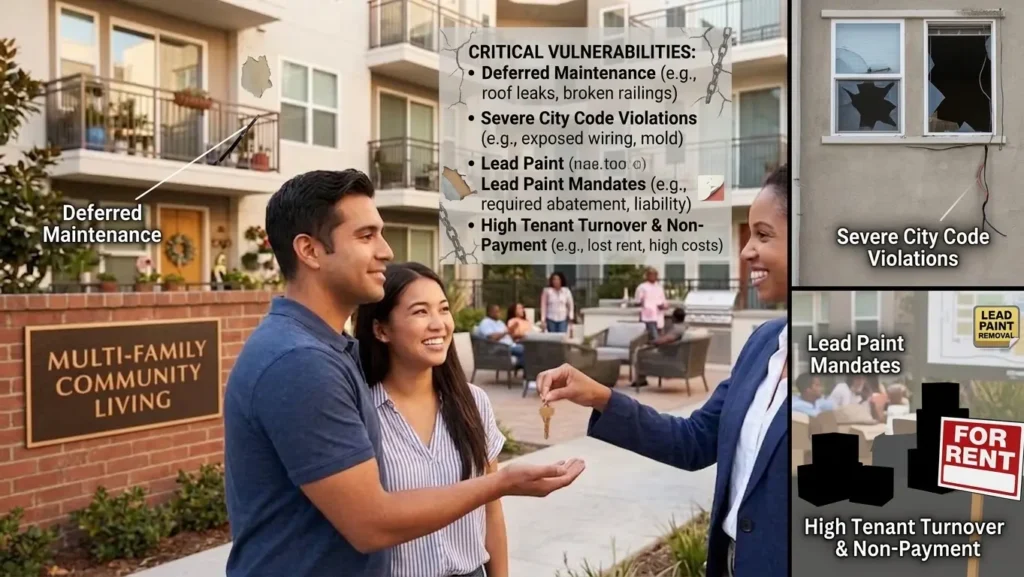
When multiple problems overlap—such as non-paying occupants residing in a triple-decker requiring extensive structural repairs—selling through standard real estate listings becomes extremely difficult.
Key Challenges When Selling a Tenant-Occupied House in Fall River
Attempting to list a rental property with active tenants creates operational friction at nearly every stage of the sales funnel.
1. Showing and Property Access Resistance
Under Massachusetts law, tenants have a legal right to quiet enjoyment of their rented premises. While landlords hold rights to entry for necessary maintenance or property showings, they must provide reasonable advance notice (typically 24 to 48 hours). Uncooperative tenants can obstruct sales efforts by:
- Refusing entry or ignoring scheduling requests.
- Leaving units cluttered, dirty, or deliberately unappealing during buyer walkthroughs.
- Disclosing negative opinions directly to prospective buyers or real estate agents during open houses.
2. Eviction Delays and Tenant Protections
Massachusetts is widely recognized as a strongly tenant-friendly state. If an occupant stops paying rent or refuses to vacate upon lease expiration, pursuing eviction through the Massachusetts Housing Court system is a lengthy and costly legal process:
- Notice to Quit: Landlords must issue a formal 14-Day Notice to Quit for non-payment, or a 30-Day Notice for lease violations/termination of tenancy-at-will.
- Summary Process Litigation: If the tenant does not vacate, a legal action (Summary Process) must be filed in court.
- Court Backlogs: Housing Court dockets can take months to resolve, during which property owners often receive zero rental income while continuing to pay property taxes, insurance, and utilities.
For landlords facing non-paying occupants, waiting for full legal eviction before attempting to sell can cause severe personal financial strain.
3. Mortgage Financing Blockers
The vast majority of traditional homebuyers rely on conventional loans, FHA loans, or VA loans. These mortgage products require stringent property appraisals and strict occupancy timelines:
- Owner-Occupancy Rules: FHA guidelines typically require the homebuyer to occupy the property as their primary residence within 60 days of closing. If an uncooperative tenant refuses to leave, the buyer cannot fulfill mortgage covenants, causing loan denial.
- Appraisal Inspection Requirements: FHA and conventional appraisers flag severe deferred maintenance, safety hazards, electrical deficiencies, or exterior paint deterioration. If the seller cannot afford repairs—or if tenants block repair contractors—the mortgage approval collapses.
Comparing Your Exit Options: Retail Listing vs. Cash Sale
When planning the liquidation of a multi-family property or a tenant-occupied house, landlords generally evaluate two primary sales pathways.
| Factor | Traditional Real Estate Listing | Selling Direct to a Cash Buyer |
| Occupancy Requirements | Prefers vacant units; active non-paying tenants severely discourage buyers. | Buys fully occupied properties, including non-paying tenants or active evictions. |
| Property Condition | Requires repair, cleaning, updates, and resolution of code violations. | Buys in 100% “As-Is” condition—no repairs, cleaning, or deleading required. |
| Transaction Timeline | 60 to 120+ days (subject to financing delays, appraisals, and tenant access). | Accelerated closing, typically within 7 to 21 days. |
| Closing Costs & Commissions | 5%–6% broker commissions plus standard closing fees and seller concessions. | Zero agent commissions, zero fees, and seller closing costs covered. |
| Financing Risk | High risk of buyers failing loan approval due to property condition or tenant delays. | Zero mortgage contingencies; guaranteed private capital or cash funding. |
To evaluate how an immediate sale compares against traditional listing routes, review our detailed guide on How It Works when transferring ownership of complex residential properties.
Step-by-Step Strategy: Navigating the Sale of Occupied Real Estate
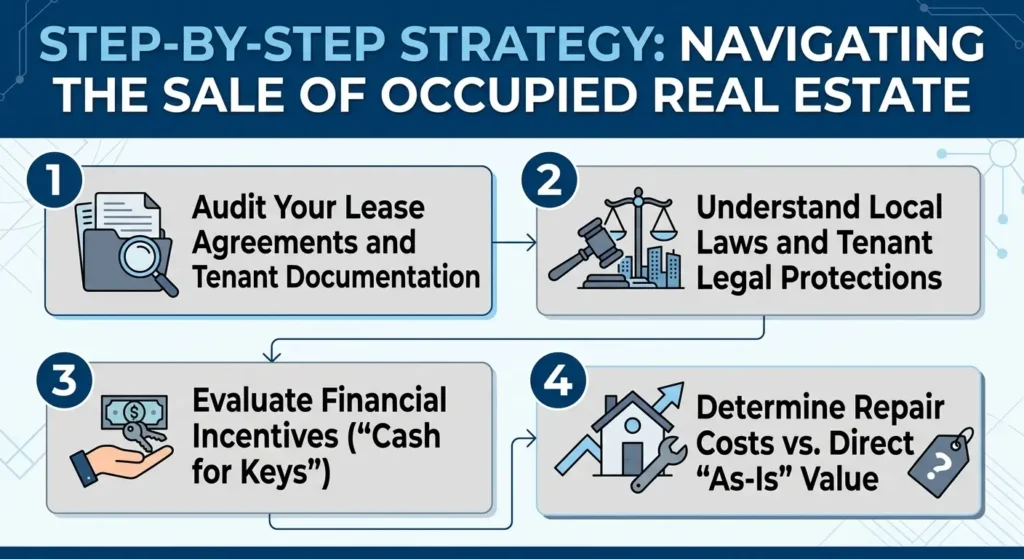
If you decide to proceed with selling a tenant occupied house in Fall River, adhering to structured execution steps minimizes legal risk and property loss.
Step 1: Audit Your Lease Agreements and Tenant Documentation
Gather all existing documentation for every occupied unit:
- Written leases, rental agreements, or tenancy-at-will arrangements.
- Security deposit accounts and legal documentation showing compliance with Massachusetts Security Deposit Law (M.G.L. c. 186, § 15B).
- Payment history logs, rent rolls, and notices sent regarding overdue balances.
- Official correspondence regarding municipal complaints or city inspections.
Accurate documentation helps prospective buyers evaluate existing tenancy liabilities accurately.
Step 2: Understand Local Laws and Tenant Legal Protections
Before taking any action, consult legal representation familiar with Massachusetts landlord-tenant law. Avoid taking unlawful actions, such as:
- Changing door locks without court order.
- Shutting off utility services (water, heat, electric).
- Removing tenant possessions from the unit.
Unlawful self-help evictions can result in severe legal damages, court injunctions, and substantial civil penalties against the property owner.
Step 3: Evaluate Financial Incentives (“Cash for Keys”)
When dealing with tenants who refuse to vacate, offering a voluntary financial settlement known as “Cash for Keys” can sometimes be more cost-effective than months of litigation. Under this agreement, the landlord offers a specific cash sum in exchange for the tenant voluntarily surrendering keys, signing a lease termination agreement, and leaving the unit clean and broom-swept.
If cash reserves are limited or the tenant flatly rejects negotiation, proceeding with a direct sale to an investor who assumes tenant liabilities is often the safest path forward.
Step 4: Determine Repair Costs vs. Direct “As-Is” Value
Assess the financial capital required to get the multi-family property into marketable condition:
- Structural masonry and foundation stabilization.
- Exterior siding, roof replacement, or porch repairs.
- Full interior turnover for units damaged by previous tenants.
- Addressing city housing code citations or board of health violations.
If the estimated cost of repairs exceeds your available liquidity or expected investment return, attempting to fix up the property before selling is impractical. Exploring our Our Company background provides clarity on how professional real estate solutions resolve complex housing inventory without requiring out-of-pocket landlord expenses.
Why Selling As-Is directly to a Cash Buyer Makes Sense
For many landlords struggling with tired multi-family properties, triple-deckers, code violations, or non-paying occupants, selling directly to a cash buying firm offers a straightforward resolution.
1. Complete Assumption of Tenancy Liabilities
Direct cash home buyers specialize in purchasing properties with existing tenancy complications. You do not need to issue notices to quit, initiate Housing Court proceedings, or negotiate with non-cooperative occupants. The buyer takes full legal assignment of lease agreements and tenant responsibilities at closing.
2. Immediate Relief from Code Violations and Repairs
Whether your Fall River property faces open building code citations, structural deterioration, or lead paint issues, cash buyers purchase real estate strictly in “As-Is” condition. Sellers do not need to execute contractor repairs, arrange city inspections, or expend capital on property maintenance.
3. Accelerated Financial Certainty
Traditional property transactions often fail late in escrow due to mortgage underwriting rejections, low appraisals, or tenant access conflicts. A cash transaction bypasses conventional bank financing entirely, allowing landlords to secure guaranteed proceeds and close on their chosen timeline.
If you are evaluating selling options across different areas in Bristol or Plymouth counties, explore how local real estate challenges are managed on our Contact Us portal to discuss property details directly with our team.
Real-World Scenarios: How Landlords Resolve Multi-Family Property Distress
Scenario A: The Inherited Triple-Decker with Unpaid Rent
An out-of-state heir inherits a 1920s triple-decker in Fall River. Two units are occupied by long-term tenants who stopped paying rent months prior. The building needs a new roof and has open city building violations. The heir lacks the local presence, legal experience, and capital needed to execute evictions and structural renovations.
- The Solution: Instead of embarking on a costly 12-month court process and full building rehab, the owner sells the property directly for cash. The cash buyer assumes all tenancy issues and structural liabilities, allowing the seller to liquidate the asset immediately without personal expense.
Scenario B: Landlord Burnout from Constant Maintenance
An investor who has owned multiple multi-family properties in Fall River for over 20 years decides to retire. However, two of the properties require substantial capital expenditure for heating upgrades, porch repairs, and interior cosmetic overhauls.
The Solution: Rather than taking on debt to fund property upgrades, the landlord chooses a direct sale option. By bypassing traditional agent commissions, open houses, and repair demands, the owner liquidates their portfolio on a predictable timetable. You can read more about how property owners handle distressed housing scenarios in our resource on Privacy Policy and real estate privacy protections.
Frequently Asked Questions (FAQ)
Can I sell a multi-family property in Fall River if a tenant is currently refusing to pay rent?
Yes. You can sell a multi-family property at any time regardless of rental payment history. While conventional retail buyers often cannot purchase non-paying tenant properties due to mortgage restrictions, professional cash buyers purchase real estate with non-paying occupants in place and handle post-closing tenancy transitions themselves.
Does a tenant have to move out when a multi-family property is sold in Massachusetts?
No. In Massachusetts, existing leases automatically transfer to the new owner upon sale. If tenants are on a fixed-term lease, the new owner must honor the existing terms until lease expiration. If occupants operate under a month-to-month tenancy-at-will, the new owner can issue proper legal notice if they intend to terminate or adjust tenancy terms.
How do city code violations impact selling a tenant-occupied house in Fall River?
City code violations create liens or legal compliance demands that attach to the property title. Conventional buyers generally cannot obtain mortgage approval on properties with active housing or health code citations. To sell traditionally, the seller must resolve all violations prior to closing. Alternatively, a direct cash buyer can purchase the property with active violations and take full legal responsibility for curing them post-sale.
Do I need to repaint or remediate lead paint before selling my Fall River triple-decker?
If you list your multi-family property on the open market, prospective buyers relying on government-backed loans (FHA/VA) will usually require lead paint remediation or stabilization before loan approval. However, selling “As-Is” directly to a cash buyer eliminates all seller remediation requirements.
Take the Next Step Toward Resolving Your Rental Property Stress

Managing a multi-family housing unit or dealing with non-paying occupants in Fall River does not have to result in long-term financial loss. Understanding your legal rights, evaluating property renovation requirements, and choosing the appropriate sales strategy empowers you to exit a stressful landlord situation smoothly.
If you are ready to explore your options for selling a tenant occupied house in Fall River without dealing with repairs, agent commissions, or tenant eviction struggles, reach out to learn how an “As-Is” cash transaction can restore your financial freedom. Get started today by reviewing our process on Eastside Home Solutions to discover how easily you can sell your multi-family property on your terms.