
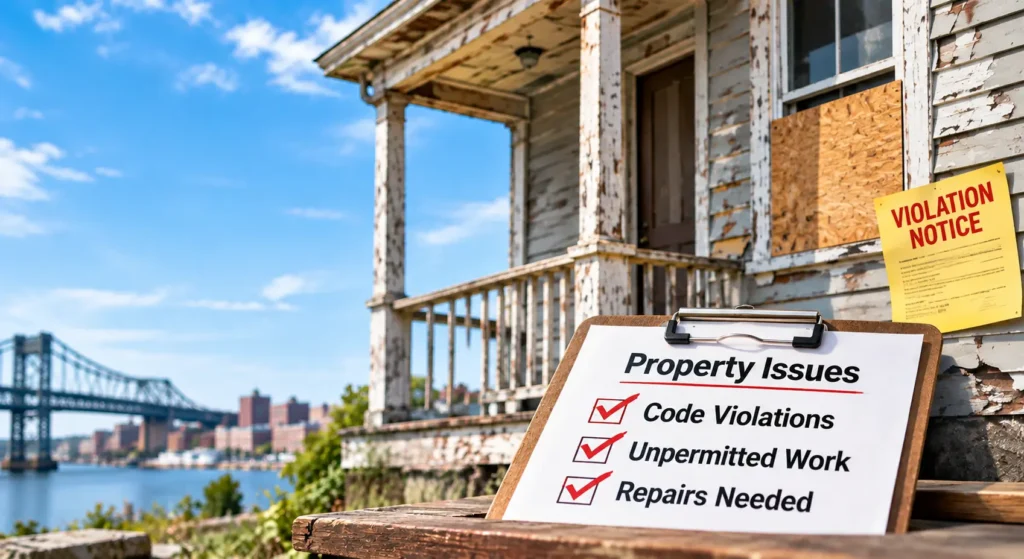
Selling a house in need of major repairs can feel like navigating an uphill battle, especially when local city agencies step in. If you need to selling a distressed property in Fall River, dealing with structural damage, toxic lead paint, open code enforcement citations, or unrecorded DIY modifications adds layers of legal and financial stress. However, owning a troubled property in Bristol County does not mean you are trapped. Whether you inherited a multi-family triple-decker with historic code issues or own a single-family home with structural settled foundations, you can sell your home quickly without spending tens of thousands of dollars on out-of-pocket repairs.
Can You Sell a Distressed Property with Violations in Fall River?
Yes, you can sell a property in Fall River with active code violations, open building permits, or unpermitted work. In Massachusetts, property owners are not legally required to repair code violations before transferring ownership, provided the full scope of the property’s condition and legal status is completely disclosed to the buyer.
While traditional retail buyers reliant on conventional mortgage financing (such as FHA or Fannie Mae loans) will almost always be turned down by lenders due to failed building inspections, cash buyers and professional real estate investors acquire these properties “as-is.” When selling to an investor, the buyer assumes full legal responsibility for resolving open code enforcement citations, pulling proper permits, and bringing the structure up to current Massachusetts state and municipal codes after closing.
Understanding Fall River’s Distressed Property Landscape
Fall River, Massachusetts, is defined by its rich industrial heritage. The city’s residential architecture heavily features multi-family triple-deckers and historical late 19th- to early 20th-century homes. While these multi-family properties offer substantial rental capacity, their age presents unique maintenance and structural challenges for property owners.
COMMON DISTRESSED PROPERTY ISSUES
| Multi-Family Challenges | Regulatory & Health Hazards |
| Sagging floor joists & framing Aging slate & rubber flat roofs Outdated knob-and-tube wiring | Childhood Lead Poisoning Prevention (CLPPP) Unpermitted plumbing/electrical additions City Code Enforcement citations & fines |
When multi-family multi-generational properties defer maintenance, small structural or mechanical issues compound into major compliance violations. Understanding the exact nature of these property defects is essential to evaluating your sale options in Bristol County.
Common Property Issues in Older Fall River Homes
Structural Damage and Aging Foundations
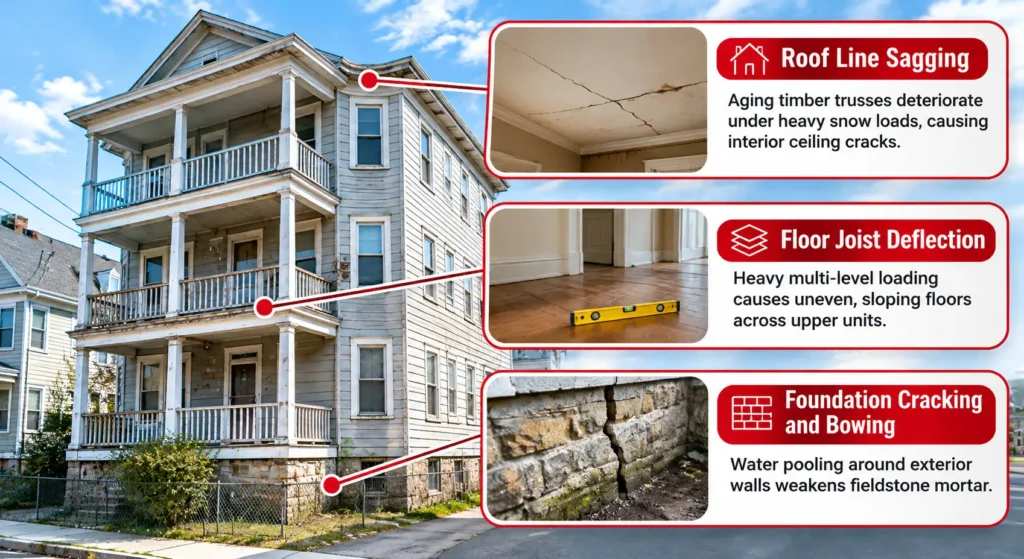
Many triple-deckers in neighborhoods like Flint, Maplewood, and Lower Highlands sit on fieldstone or early poured-concrete foundations. Decades of freeze-thaw cycles, water intrusion, and deferred structural upkeep can result in:
- Foundation Cracking and Bowing: Water pooling around exterior walls weakens fieldstone mortar.
- Floor Joist Deflection: Heavy multi-level loading causes uneven, sloping floors across upper units.
- Roof Line Sagging: Aging timber trusses deteriorate under heavy snow loads, causing interior ceiling cracks.
Lead Paint and Environmental Hazards
Massachusetts enforces strict lead paint compliance under the Massachusetts Lead Law (M.G.L. c. 111, § 189A–199B). Homes built prior to 1978 containing lead paint create significant liability, particularly when housing children under six years of age.
- De-Leading Orders: The Fall River Department of Health & Human Services and state inspectors issue mandatory compliance orders when peeling lead paint or contaminated dust is discovered.
- Encapsulation Costs: Full professional de-leading or encapsulation across a three-story triple-decker often costs tens of thousands of dollars, presenting a major barrier to traditional market listing.
Outdated Plumbing and Electrical Systems
Older homes often contain layered utility upgrades completed over a century:
- Knob-and-Tube Wiring: Active knob-and-tube or ungrounded two-wire branch circuits frequently fail modern insurance underwriting requirements.
- Galvanized Steel & Lead Piping: Aging water supply lines degrade internally, causing restricted flow and increased leak potential between floors.
Navigating Fall River City Code Violations and Citations
The Fall River Code Enforcement Division monitors residential properties to preserve public health, safety, and neighborhood stability. When a property breaches the Massachusetts State Sanitary Code (105 CMR 410.000) or local building ordinances, inspectors issue formal notices of violation.
Types of Code Enforcement Notices
- Notice of Violation: Details specific non-compliant conditions, such as trash accumulation, overgrown vegetation, exterior structural deterioration, or illegal unit conversion.
- Order to Correct: Specifies a strict calendar window (often 7 to 30 days) within which the property owner must remedy specified defects.
- Citation & Fines: Accruing daily or weekly monetary penalties assessed against the property title if corrections are not verified by municipal inspectors.
- Condemnation / Order to Vacate: Issued when structural hazards, lack of utilities, or severe sanitary breaches deem a dwelling unsafe for human habitation.
How Municipal Liens Impact Property Title
Unpaid city code enforcement fines, utility arrears, or emergency board-up costs turn into municipal tax liens attached directly to your property title. These liens must be satisfied at closing before title insurance can be issued to a buyer.
If you are facing mounting city citations, explore how to sell your house fast in Fall River to resolve title liens and clear code enforcement records without funding expensive upfront repairs.
The Legal Implications of Unpermitted Work
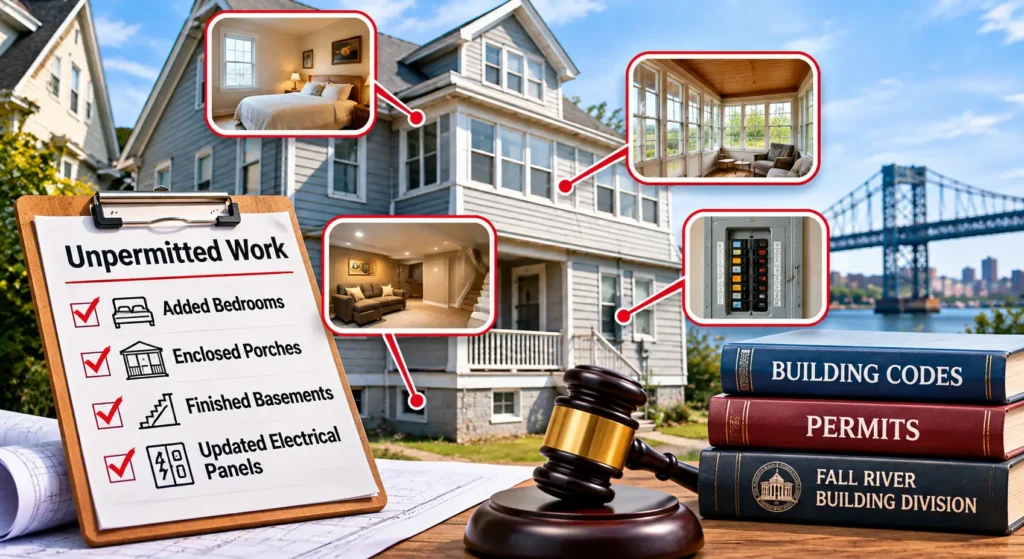
Over decades of ownership, previous landlords or homeowners may have added bedrooms, enclosed porches, finished basements, or updated electrical panels without applying for building permits through the Fall River Building Division.
Disclosing Unpermitted Improvements
Massachusetts law requires sellers and real estate licensees to disclose known material defects and non-compliant alterations. Concealing unpermitted work exposes sellers to post-closing litigation under M.G.L. Chapter 93A (Consumer Protection Act).
Common Examples of Unpermitted Work
- Converting Attic/Basement Space: Adding living quarters or extra bedrooms without meeting egress window, head-height, or emergency escape standards.
- Electrical Panel Swaps: Upgrading service panels or adding sub-panels without municipal electrical inspections.
- Plumbing Modifications: Adding secondary bathrooms or kitchens without licensed master plumber permits.
- Deck and Porch Expansions: Structural modifications built outside set boundary lines or without load-bearing footing approvals.
Consequences During Traditional Real Estate Sales
When selling through standard mortgage financing:
- Appraiser Flags: FHA, VA, and conventional mortgage appraisers cross-reference property field cards with physical structures. Unpermitted additions are excluded from appraised square footage or flagged for mandatory permitting.
- Permit Retrofitting: The city may require walls to be opened up so building, plumbing, or electrical inspectors can examine hidden rough work, resulting in unpredictable costs.
- Buyer Mortgage Denials: Lenders refuse to issue funds until all unpermitted alterations are either fully permitted or returned to their original permitted configuration.
Comparing Your Options: Traditional Listing vs. Direct Cash Sale
When selling a distressed property loaded with citations, lead issues, or structural defects, you have two primary routes:
SALE METHOD COMPARISON MATRIX
| Traditional On-Market Sale | Direct Off-Market Cash Sale |
| Requires pre-sale inspections Demands upfront repair capital High risk of buyer loan denial Pays 5-6% real estate broker fees Closing takes 60–90+ days | Purchased 100% As-Is Zero repair or de-leading required Guaranteed cash funding; no bank delays Zero realtor commissions or closing fees Flexible closing timeline (7–14 days) |
For property owners who want to avoid financing delays and open-ended contractor bids, working with a direct buyer offers a direct pathway. Learn more about our process by visiting how we buy houses for a clear breakdown of steps.
Step-by-Step Guide: How to Sell a Distressed House As-Is
| AS-IS DIRECT SALE PROCESS FLOW |
| [STEP 1] Request Property Evaluation –> Assess citations, unpermitted work, and current physical condition |
| [STEP 2] Receive Formal As-Is Cash Offer –> Review transparent pricing with zero repair contingencies |
| [STEP 3] Title & Municipal Lien Search –> Coordinate with local closing attorney to clear municipal records |
| [STEP 4] Closing & Asset Transfer –> Sign closing documents; receive funds; transfer property obligations |
Step 1: Document All Known Citations and Property Defects
Gather all paperwork regarding your property, including:
- Fall River Code Enforcement notices and violation letters.
- Health department lead orders or tenant complaints.
- Existing building permits or historical field cards.
- Outstanding water, sewer, or tax statements.
Step 2: Request an As-Is Cash Evaluation
Avoid spending funds on cosmetics or structural stabilization. Reach out to local home buyers who understand Bristol County building regulations and specialize in distressed asset acquisitions. You can request a competitive valuation directly through our get a cash offer page.
Step 3: Clear Title and Tax Obligations at Closing
During the settlement process, your closing attorney works with the buyer to calculate all outstanding municipal fines, tax obligations, and utility balances. These fees are settled directly out of sale proceeds at closing, clearing your personal liability without requiring upfront out-of-pocket cash.
Step 4: Complete Settlement on Your Schedule
Because cash purchases remove mortgage underwriting requirements, closing can occur in as few as 7 to 14 days, or on whatever timeline suits your relocation or estate settlement needs.
Local Resources and Important Contacts
Property owners seeking official records, code status reports, or permit histories can contact municipal offices in Fall River:
- Fall River Inspectional Services / Building Division
One Government Center, Room 524, Fall River, MA 02722
Phone: (508) 324-2560
Provides building permit histories, inspection scheduling, and zoning compliance verification. - Fall River Code Enforcement Bureau
One Government Center, Fall River, MA 02722
Phone: (508) 324-2585
Handles housing code violations, minimum sanitary standards, and exterior property maintenance citations. - Fall River Department of Health & Human Services
One Government Center, Room 400, Fall River, MA 02722
Phone: (508) 324-2410
Oversees tenant health complaints, sanitation orders, and lead paint compliance documentation. - Bristol County Registry of Deeds (Fall River District)
44 North Main Street, Fall River, MA 02720
Phone: (508) 675-4080
Maintains public land records, deeds, mortgages, and municipal tax lien filings.
Additional Solutions for Challenging Property Situations
Distressed properties often involve complex financial, legal, or personal circumstances beyond physical repairs.
- Facing Foreclosure? If mounting code fines or mortgage arrears threaten legal action, review strategies to stop foreclosure before auction dates are set.
- Inherited a Distressed Property? Managing an out-of-state or multi-heir estate with code violations requires specialized care. Read our detailed guide on how to sell an inherited house to streamline probate property sales.
- General Real Estate Guidance: Browse our comprehensive blog library for practical solutions to complex property problems throughout Massachusetts.
Frequently Asked Questions (FAQs)
Can I legally sell a house in Fall River with active code enforcement violations?
Yes. Massachusetts law allows property owners to sell real estate with active code violations, provided all known defects, notices, and legal violations are fully disclosed to the buyer. Direct cash buyers routinely purchase properties with active citations and assume full responsibility for remediating the violations after closing.
Who pays off city code enforcement fines and municipal liens during an as-is sale?
All municipal fines, tax liens, and utility arrears are deducted directly from the gross purchase proceeds at the closing table. The closing attorney remits these payments to the City of Fall River to deliver a clear title to the buyer, eliminating the need for the seller to pay out of pocket before sale.
Will unpermitted work prevent me from getting a traditional buyer?
Unpermitted work frequently prevents traditional buyers from obtaining mortgage financing. Lenders require property features to match municipal tax assessor and building records. If unpermitted work is detected during appraisal or home inspection, the lender will usually withhold loan approval until permits are retroactively secured or the work is removed.
How does lead paint affect the sale of a multi-family home in Massachusetts?
Under the Massachusetts Lead Law, property owners renting to families with children under six must eliminate or cover lead hazards. If you sell on the open market, buyers taking out conventional mortgages may demand full de-leading compliance before closing. Purchasing as-is via cash transactions allows sellers to transfer the property without completing de-leading repairs.