
Owning a home in historic or coastal Plymouth comes with undeniable charm, but it also carries unique maintenance challenges. Over decades, coastal winds, salty air, severe nor’easters, and the natural aging of historic structures can take a massive toll on roof framing, exterior siding, foundation walls, plumbing, and electrical systems. When routine maintenance gets pushed off year after year, minor issues compound into overwhelming deferred maintenance liabilities. If your property is facing $50,000, $75,000, or well over $100,000 in required rehabilitation, you might wonder if it is even possible to clear the hurdle and sell a fixer upper Plymouth MA property without spending a small fortune out of pocket first.
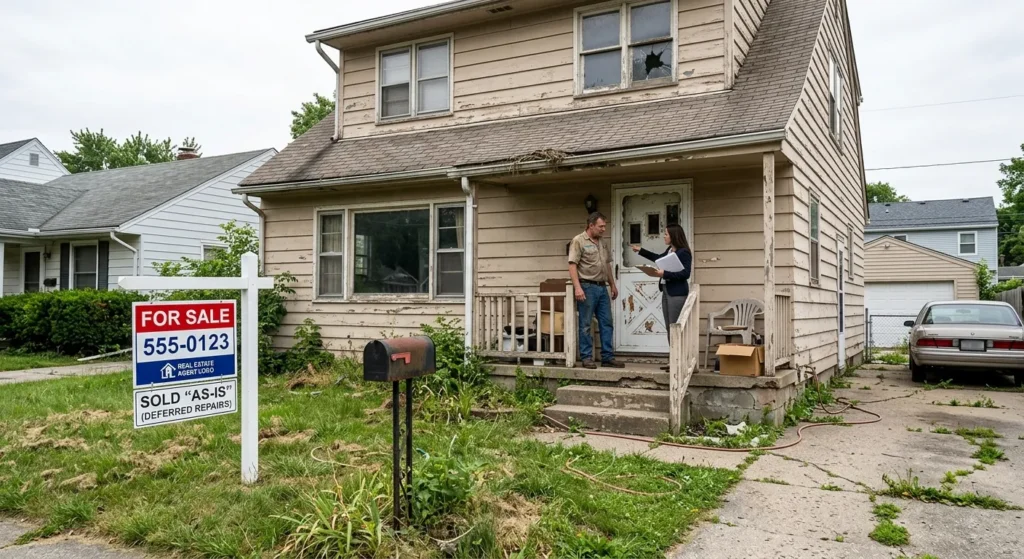
The short answer is yes, you can absolutely sell a house in Plymouth that needs $50k+ in major deferred repairs. However, doing so requires understanding how major property defects impact standard buyer financing, home inspection contingencies, and traditional real estate listings. In this guide, we will break down the true costs of deferred maintenance in coastal Massachusetts, examine why traditional mortgage lenders reject homes with severe repair needs, explore your main selling pathways, and explain how selling as-is directly to a local home buyer can help you unlock your equity without stress.
The Reality of $50k+ Deferred Maintenance in Plymouth, MA
Plymouth is home to many long-term homeowners who have lived in their residences for thirty, forty, or even fifty years. While home equity grows significantly over such extended periods, so does the wear and tear on major structural and functional systems. Coastal weather conditions—such as freeze-thaw cycles, driving rain, high humidity, and salty ocean spray—accelerate structural deterioration faster than in inland communities.
When maintenance costs slowly outpace a homeowner’s fixed income, physical capability, or personal desire to manage endless contractor projects, deferred repairs quietly pile up.
Common High-Cost Repair Issues in Coastal & Historic Plymouth Homes
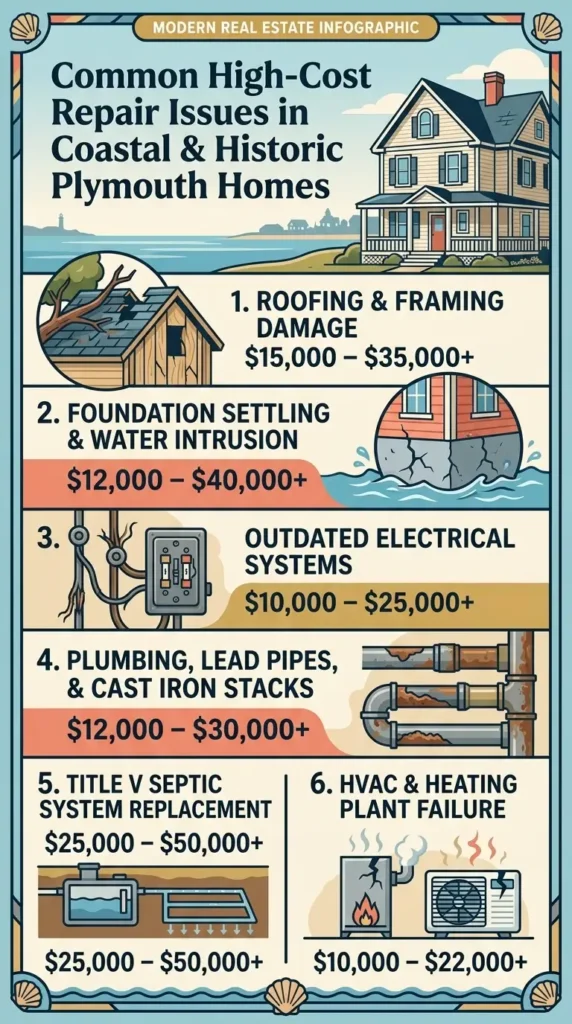
- Roofing and Framing Damage ($15,000 – $35,000+) Older asphalt shingle or cedar shake roofs subjected to Atlantic storms eventually leak. Over time, undetected water intrusion rots rafters, structural sheathing, and fascia boards, leading to interior drywall damage and dangerous mold growth.
- Foundation Settling and Water Intrusion ($12,000 – $40,000+) Many older properties near Plymouth Harbor, Manomet, or Cedarville sit on aging stone, brick, or unreinforced concrete foundations. High water tables and coastal storm surges lead to bowing cellar walls, major foundation cracks, and active water flooding.
- Outdated Electrical Systems ($10,000 – $25,000+) Historic homes built before the 1970s often retain knob-and-tube wiring, ungrounded outlets, or 60-amp fuse panels. Modern insurance companies frequently refuse to issue policies on homes with active knob-and-tube wiring or outdated Federal Pacific electrical panels.
- Plumbing, Lead Pipes, and Cast Iron Stacks ($12,000 – $30,000+) Corroded galvanized steel pipes, deteriorating cast iron main sewer lines, and legacy lead water pipes require full repiping to meet current Massachusetts plumbing codes.
- Title V Septic System Replacement ($25,000 – $50,000+) Under Massachusetts Title V regulations, properties not connected to municipal sewer must pass a rigorous septic inspection before ownership transfer. Replacing a failed septic tank and leach field in rocky or coastal Plymouth soil can easily exceed $35,000.
- HVAC and Heating Plant Failure ($10,000 – $22,000+) Replacing an obsolete, oil-fired boiler or inefficient heating system with modern heating technology represents another massive capital expenditure that many homeowners simply cannot justify out of pocket.
Why Traditional Buyers Struggles to Purchase Homes Needing Major Repairs
When homeowners evaluate selling a distressed property, their first instinct is often to call a traditional real estate agent and list the home on the local Multiple Listing Service (MLS). While the open market works exceptionally well for updated, move-in-ready houses, it creates significant friction when selling a property with $50k+ in deferred maintenance.
1. Mortgage Loan Ineligibility (FHA, VA, and Conventional)
The vast majority of traditional retail buyers rely on conventional mortgages or government-backed loans (FHA or VA) to purchase a property. However, institutional lenders enforce strict minimum property standards (MPS) regarding safety, security, and structural soundness.
If a home appraiser notes a leaking roof, exposed electrical wiring, peeling exterior paint (a major lead paint hazard in pre-1978 homes), a non-functioning furnace, or a failed Title V septic system, the lender will refuse to approve the mortgage until those items are fully repaired and re-inspected.
2. High Repair Quotes and “Buyer Discounting”
Retail buyers who tour a home requiring major work typically over-estimate the cost and effort involved. If a general contractor quotes $50,000 for essential repairs, a retail buyer will often demand a price reduction of $80,000 to $100,000 to compensate for their time, risk, and inconvenience.
3. FAILED Home Inspections and Cancelled Purchase Contracts
Even if an retail buyer makes an offer on a house needing work, the formal home inspection almost always triggers aggressive renegotiations. Once the inspector delivers a 50-page report detailing structural defects, outdated utilities, and code violations, buyers frequently panic and cancel the purchase contract, leaving the seller right back at square one after weeks of lost time.
For more insights into handling property sales with significant repair hurdles, explore our comprehensive breakdown on Selling a House That Needs Major Repairs.
Option 1: Renovate Before Selling (The High-Risk, High-Stress Route)
One option available to homeowners is hiring contractors to complete all necessary upgrades before putting the house on the market. While this strategy theoretically maximizes the final retail sales price, it carries severe drawbacks for long-time owners or heirs.
- Upfront Capital Required: You must have tens of thousands of dollars in liquid cash or take on high-interest loans to finance the construction work upfront.
- Contractor Delays and Overruns: Permitting through Plymouth town halls, material supply chain delays, and contractor scheduling conflicts can easily turn a 2-month renovation into a year-long ordeal. Construction budget overruns of 20% to 30% are common when opening up older walls.
- Holding Costs: While construction drags on, you remain responsible for monthly property taxes, home insurance premiums, utility bills, and mortgage payments.
- No Guaranteed ROI: Spending $60,000 on renovations does not guarantee you will recoup $60,000 or more at closing after accounting for real estate commissions, closing fees, and holding expenses.
Option 2: List As-Is on the MLS with an Agent
If you choose not to make repairs, you can list the home “as-is” on the MLS. While this exposes the home to a wide audience, it presents distinct operational challenges:
- Endless Walkthroughs and Open Houses: You must allow dozens of curious buyers and real estate agents through your private space, often highlighting physical flaws and cluttered areas.
- Lowball Investor Offers: MLS listings for distressed homes tend to attract speculative flippers who make low cash offers accompanied by lengthy inspection contingencies and financing clauses.
- Agent Commissions and Fees: Even when selling a house as-is on the market, you are still obligated to pay traditional real estate commissions (typically 5% to 6% of the sale price) plus seller closing costs.
If you are weighing the financial pros and cons of traditional listing routes versus cash buyers, read our transparent breakdown on Direct Home Buyer vs. Taunton Real Estate Agent: Net Profit Comparison.
Option 3: Sell Directly to an As-Is Cash Home Buyer (The Fast, Certain Solution)
For homeowners who want to skip contractor headaches, open houses, repair demands, and commission fees, selling directly to a professional cash home buyer like Eastside Home Solutions offers the most seamless pathway.
How an As-Is Direct Cash Sale Works
When you sell your Plymouth house directly to a local home buyer, you eliminate every traditional sales barrier:

- Zero Out-of-Pocket Repairs Required: We buy properties in 100% “as-is” condition. Whether your home has a caving roof, a failed Title V septic system, outdated electrical wiring, structural foundation issues, or decades of accumulated clutter, you don’t need to fix a single thing.
- No Lender Inspections or Appraisal Hurdles: Because direct cash buyers utilize private capital rather than traditional bank mortgages, there are no bank appraisals or mandatory lender repairs.
- No Commissions or Hidden Closing Costs: When you sell directly, you pay zero real estate agent fees or hidden closing costs. The cash offer you receive is the amount you account for at closing.
- Flexible Closing Timeline: You choose the exact closing date that fits your schedule—whether you need to close in as little as 7 to 14 days or require several months to organize your transition.
- Take What You Want, Leave the Rest: You never have to spend energy cleaning out decades of stored belongings, unwanted furniture, or junk. Simply take your cherished personal keepsakes and leave everything else behind for us to handle.
To understand how direct sales apply across various real estate scenarios, read our guide on Settling an Estate: How to Sell an Inherited House in Attleboro, MA.
Step-by-Step: How to Sell Your Plymouth Fixer-Upper As-Is
If you decide that selling your Plymouth property without making repairs is the best choice for your situation, here is the simple 4-step process to transition from overwhelmed homeowner to cashed-out seller:[Step 1: Contact Us] ➔ [Step 2: Simple Property Walkthrough] ➔ [Step 3: Receive Fair Cash Offer] ➔ [Step 4: Close & Get Paid]
Step 1: Request an Assessment
Reach out to local real estate cash buyers who specialize in Plymouth County properties. Share basic details about your home, including its location, approximate age, overall condition, and the specific major repairs needed.
Step 2: Schedule a Brief Property Walkthrough
A representative will arrange a brief, low-pressure walkthrough of the property to evaluate its structural condition and surrounding neighborhood value. You do not need to clean, stage, or organize the house prior to this visit.
Step 3: Receive a Transparent As-Is Cash Offer
Based on current Plymouth market data and necessary restoration costs, you will receive a clear, written cash offer with zero obligations.
Step 4: Choose Your Closing Date and Collect Your Funds
Once you accept the offer, local real estate attorneys handle all necessary legal paperwork and title checks. You pick the closing date, sign the paperwork, and receive your proceeds directly via wire transfer or bank check.
For homeowners dealing with administrative hurdles or pre-foreclosure timelines, learn more about our local assistance programs in our article on How to Stop Foreclosure in Taunton at the Last Minute. Additionally, if your property has Title V septic issues or environmental concerns, read our helpful resource on How to Sell a Rural House with Title V Septic Issues in Middleboro.
Financial Comparison: Traditional Listing vs. Direct Cash Sale
To evaluate whether an as-is cash sale makes financial sense for your Plymouth home, consider this side-by-side comparison of a typical property needing $60,000 in deferred repairs:
| Financial Factor | Traditional Retail Listing | Direct As-Is Cash Sale |
| Out-of-Pocket Repair Costs | $60,000 (Required before listing) | $0 (Sold completely as-is) |
| Real Estate Commissions (5-6%) | ~$24,000 (On $400k retail value) | $0 (No agent fees) |
| Seller Closing Costs (1-2%) | ~$8,000 | $0 (Covered by buyer) |
| Holding Costs during Sale/Remodel | $10,000 – $18,000 (4 to 8 months) | $0 (Closes in 7 to 14 days) |
| Inconvenience & Cleaning Effort | High (Staging, showings, cleanout) | None (Leave behind unwanted items) |
| Closing Certainty | Low (Financing & inspection risks) | 100% Guaranteed (Cash closing) |
When you tally up out-of-pocket construction costs, agent commissions, seller closing costs, holding expenses, and the risk of price drops, selling directly as-is often yields a comparable or superior net payout with zero hassle.
Frequently Asked Questions About Selling a Plymouth Fixer-Upper
Can I sell a house in Plymouth, MA with a failed Title V septic inspection?
Yes. While traditional buyers cannot secure standard mortgage financing on a house with a failed Title V septic system, professional cash buyers can purchase the property as-is and take full responsibility for repairing or replacing the septic system after closing.
Do I need to remove clutter or old furniture before selling?
Not when selling directly to a cash home buyer. You are welcome to take your personal belongings and memories, leaving all unwanted clutter, trash, or heavy furniture behind.
How fast can I close on my Plymouth home?
Because direct cash sales do not depend on institutional mortgage underwriting or bank appraisals, closings can happen in as little as 7 to 14 business days, or whenever you are ready.
Will I get a fair cash offer for my home?
Reputable home buyers calculate cash offers based on the After-Repair Value (ARV) of comparable renovated homes in your specific Plymouth neighborhood, minus the actual cost of repairs and holding expenses. This provides a fair, transparent price that reflects the property's true current condition without requiring you to invest your own capital upfront.
Take the Stress Out of Selling Your Plymouth Home

You do not have to let $50,000+ in deferred repairs, high maintenance costs, or overwhelming contractor quotes stand between you and your home equity. Whether you own a historic property in Downtown Plymouth, a coastal home in Manomet, or a family residence near White Horse Beach, selling your home as-is gives you the freedom to move forward on your own terms.
At Eastside Home Solutions, we specialize in helping long-time homeowners and heirs navigate complex property conditions across Massachusetts. We buy houses in any condition, handle all cleanouts and repairs, and close on the schedule that works best for you.
Ready to see what your Plymouth fixer-upper is worth as-is? Contact Eastside Home Solutions today to request a free, no-obligation cash offer on your home!