
Selling a home in Plymouth County often comes with unique local charm, expansive acreage, and classic New England architecture. However, when it comes to rural homes, a single state environmental regulation can grind a traditional real estate transaction to a complete halt: Massachusetts Title V (310 CMR 15.000). If you are looking to sell a rural house with Title V septic issues in Middleboro, you are not alone. Many homeowners discover right before placing their home on the Market that their aging underground wastewater system is non-compliant, damaged, or failing inspection altogether. Understanding how to navigate local board of health requirements, financial repairs, and alternative buyer options can save you thousands of dollars and months of stress.
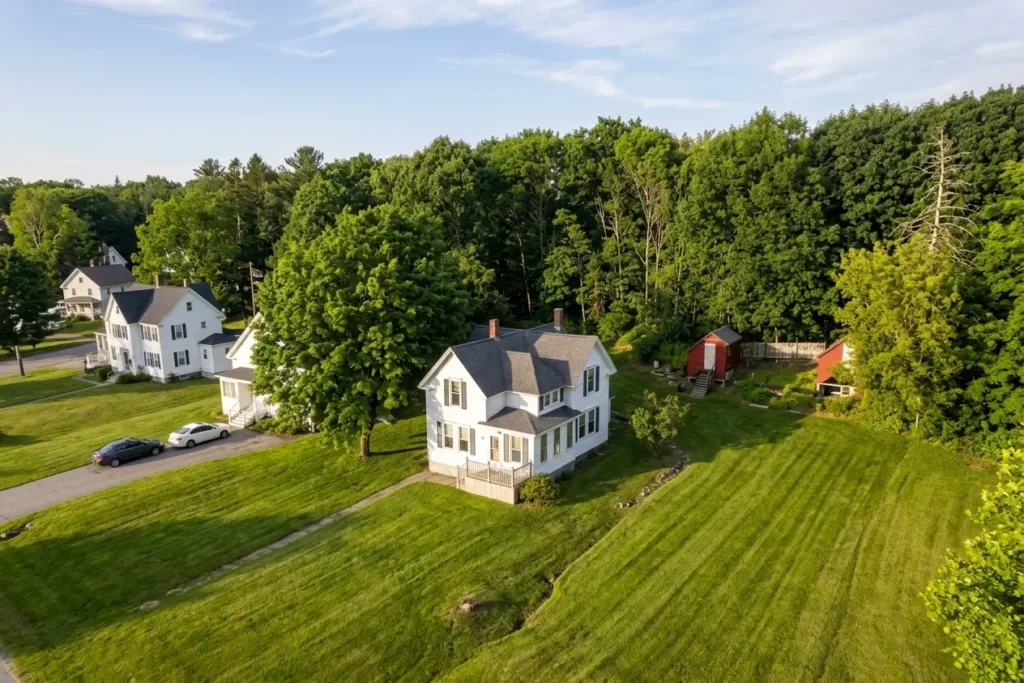
In this comprehensive guide, we will break down what Title V compliance actually means for Middleboro property owners, the exact challenges you face when selling a home with a failed septic system, how to handle repairs versus selling “as-is,” and how working directly with an experienced local home buyer can help you bypass traditional market roadblocks completely.
What Is Title V and Why Is It Critical in Middleboro?
Title V is the section of the Massachusetts Environmental Code that governs on-site sewage disposal systems, commonly known as septic systems. Because Middleboro features extensive rural zoning, large agricultural parcels, and homes set far back from municipal sewer lines, a significant portion of local properties rely entirely on private septic systems to handle household wastewater.
Under Massachusetts law, a Title V inspection is required in most cases prior to transferring title to a property. The inspection evaluates key system components, including:
- The Septic Tank: Checking for structural integrity, leaks, sludge build-up, and proper baffle operation.
- The Distribution Box (D-Box): Ensuring wastewater flows evenly to all absorption lines.
- The Leaching Field / Soil Absorption System (SAS): Determining if liquid effluent drains properly into the ground without surfacing or reaching groundwater levels.
If an inspector determines that your system has structural defects, sits too close to groundwater or drinking wells, or causes sewage overflow, the system will receive a status of Failed.
Common Causes of Title V Septic Failure in Rural Properties
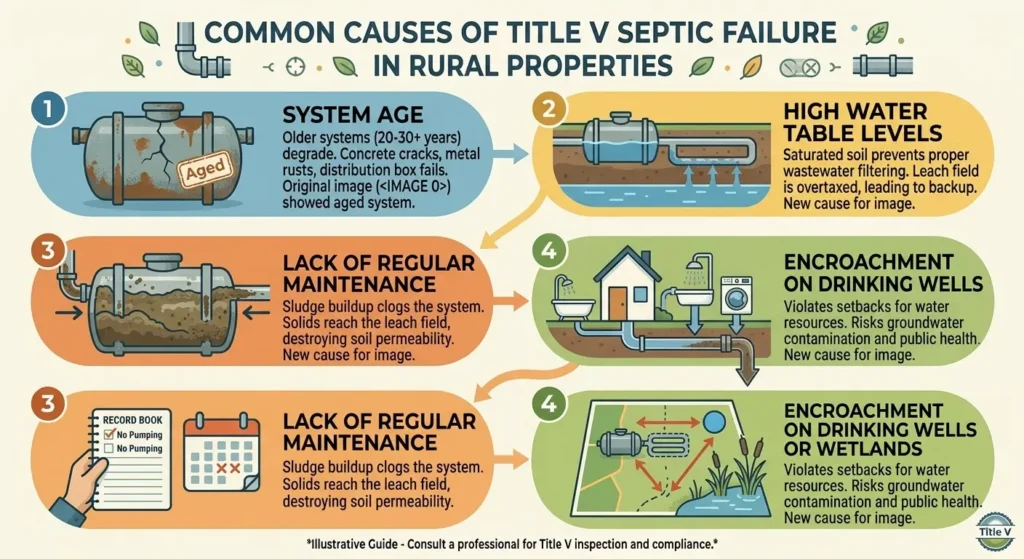
Middleboro’s countryside features high water tables, proximity to wetlands, rivers, and cranberry bogs, as well as historic homes built long before modern environmental codes were enacted. Several common factors lead to Title V inspection failures:
- System Age: Most standard septic leach fields have an average functional lifespan of 20 to 30 years. Older rural properties often still operate on cesspools or first-generation systems, which automatically fail Title V compliance upon sale.
- High Water Table Levels: Title V requires a mandatory separation distance between the bottom of the leach field and the high groundwater elevation. Middleboro’s geography means many older systems fail simply because groundwater levels exceed current safety margins.
- Lack of Regular Maintenance: Failure to pump the septic tank every 3 to 5 years leads to solid waste entering the distribution box and clogging the soil absorption lines.
- Encroachment on Drinking Wells or Wetlands: Rural Middleboro properties using private well water must maintain strict distance buffers between the septic tank, wellhead, and nearby resource areas.
The Core Challenges of Selling a House with a Failed Septic System
If your inspection comes back with a failure, attempting to sell through conventional real estate channels creates immediate friction. Here are the primary obstacles sellers face:
1. Mortgage Lenders Will Not Approve Funding
The vast majority of traditional buyers rely on conventional, FHA, or VA mortgage loans. Standard lending guidelines strictly prohibit banks from issuing a mortgage on a property that lacks a passing Title V inspection or an officially approved, escrow-funded repair plan. This instantly disqualifies most retail buyers browsing the local MLS.
2. High Out-of-Pocket Replacement Costs
Replacing a failed septic system in Middleboro is rarely cheap. Between engineering soil tests (perc tests), formal design plans submitted to the Middleboro Board of Health, heavy excavation work, and materials, a complete replacement typically costs anywhere from $15,000 to $40,000+. For rural properties requiring raised mound systems (Title V presby systems) due to high water tables, costs can escalate even further.
3. Lengthy Project Timelines
Navigating the septic engineering and installation process takes substantial time. Getting a percolation test scheduled, waiting for engineering designs, obtaining Board of Health approvals, acquiring contractors, and completing installation can take between 2 to 6 months. If winter frost hits Plymouth County, digging may be delayed even longer.
4. Buyer Demands for Huge Price Concessions
Retail buyers who are open to taking on a failed septic system will typically demand steep discounts, demanding price drops far higher than the actual cost of repair to account for their risk and hassle.
Options for Selling Your Rural Property with Title V Issues
If you own a property with a failed or non-compliant septic system in Middleboro, you generally have three strategic paths forward:
Option 1: Repair or Replace the System Before Selling
If you have ample liquid capital and are in no rush to move, you can pay for the engineering and installation out-of-pocket before placing the house on the market.
- Pros: Restores full pool of traditional mortgage-backed buyers; enables maximum retail listing price.
- Cons: Requires thousands in upfront cash; delays your sale timeline by months; carries risk of unexpected soil or engineering complications.
Option 2: Establish a Title V Escrow Account at Closing
In some situations, sellers can negotiate an arrangement where the system is replaced after closing using funds held in an escrow account. The seller or buyer places 150% of the estimated replacement cost into an escrow holdback account funded by sale proceeds.
- Pros: Allows the transaction to proceed without requiring the seller to pay full repair costs prior to closing.
- Cons: Requires explicit approval from the buyer’s mortgage lender (which many banks reject); requires fully engineered plans and contractor quotes already approved by the local town board prior to closing.
Option 3: Sell Your House “As-Is” to a Direct Cash Buyer
The fastest and simplest alternative is selling your home directly as-is to a specialized real estate investment company. Cash buyers purchase properties without requiring bank mortgage financing, eliminating the legal requirement for a passing Title V inspection prior to closing.
To evaluate how an direct cash transaction works compared to a traditional agent listing, explore how a direct home buyer vs real estate agent comparison breaks down true net profits after factoring in repair costs, agent commissions, and closing delays.
Cons: Purchase price reflects the cost of repairs assumed by the buyer.
Pros: Zero upfront repair costs; no waiting for engineering or perc tests; guaranteed cash sale; flexible closing timelines (as fast as 7-14 days).
Step-by-Step Process: Navigating Title V in Middleboro
If you are evaluating your property’s septic condition, following a clear action plan will help you avoid costly mistakes:
| Step | Action Item | Details |
| 1. Official Inspection | Hire a Licensed Title V Inspector | Ensure the inspector is certified in Massachusetts and familiar with Middleboro Board of Health guidelines. |
| 2. Review Official Report | Pass, Conditional Pass, or Fail | Determine if minor repairs (like replacing a D-Box) will fix the issue or if a full system overhaul is required. |
| 3. Obtain Cost Estimates | Contact Soil Engineers & Excavators | Get written estimates for perc testing, engineering plans, and total site excavation. |
| 4. Choose Your Selling Strategy | Retail Listing vs. As-Is Cash Sale | Calculate your net equity after subtracting repair expenses, timeline holding costs, and real estate commissions. |
| 5. Complete the Transaction | Execute Disclosure & Closing Documents | Complete required state septic disclosures accurately to ensure legal protection. |
Special Considerations for Rural Middleboro Acreage & Older Homes
Rural properties in Middleboro often come with unique physical attributes that complicate standard septic repairs:
- Historic Structures & Old Farmhouses: Older properties often require extensive structural or mechanical updates in addition to septic fixes. If your home needs broader work beyond wastewater compliance, learn more about strategies for selling a house that needs major repairs without draining your savings.
- Environmental & Wetland Buffers: Projects located near natural water sources require approval from the local Conservation Commission under the Massachusetts Wetlands Protection Act, adding extra bureaucratic steps to standard Board of Health approvals.
- Large Acreage & Outbuildings: Expansive land parcels can make site access easier for heavy excavation equipment, but long pipe runs from the dwelling to an ideal leaching area can drive up overall material costs.
Legal Disclosures When Selling with Septic Problems
In Massachusetts, sellers are legally obligated to disclose all known defects regarding their property’s wastewater system. Concealing a failed Title V inspection report or selling without proper documentation can lead to severe legal penalties and post-sale lawsuits from buyers.
When selling a property with septic issues, you must ensure:
- The official Title V inspection report is provided to the buyer prior to signing a Purchase and Sale Agreement (P&S).
- If selling “as-is” for cash, the purchase contract explicitly states that the buyer acknowledges the failed/non-compliant system and assumes full legal responsibility for repair or replacement post-closing in accordance with town and state regulations.
Why Selling to a Direct Cash Buyer Makes Sense for Title V Properties
For many local property owners—especially those handling an inherited property, managing a life transition, or simply lacking $20,000+ in liquid savings—taking on a massive excavation project is unfeasible.
If you have recently inherited a family home or estate in Plymouth County with an outdated septic system, review our comprehensive resource on settling an estate and selling an inherited house to understand how probate, legal titles, and property conditions interact.
Here is why selling your rural Middleboro house directly to a real estate solution provider like Eastside Home Solutions offers significant advantages:
- No Out-of-Pocket Expenses: You do not pay for perc tests, site engineering, Board of Health filings, or contractor fees.
- Skip Bank Financing Hurdles: Because cash buyers do not rely on institutional mortgage approvals, a failed Title V inspection will not derail the deal.
- Speed & Convenience: Instead of waiting 3 to 6 months for septic designs and construction permits, you can close in a matter of days or on your preferred timeline.
- No Real Estate Commissions: Avoid paying 5-6% in real estate agent commissions, helping offset any price adjustments made for property condition.
For homeowners facing tight financial windows or sudden life changes, avoiding long market delays is critical. Learn about options for urgent property situations in our guide on how to stop foreclosure at the last minute.
Furthermore, if you are relocating quickly for employment or personal reasons, read our guide on how to sell your house fast when relocating for work to see how streamlined direct acquisitions eliminate moving friction.
Frequently Asked Questions (FAQs)
Can I sell a house in Massachusetts if the septic system fails Title V?
Yes. While state law requires a Title V inspection upon transfer, you can legally sell a home with a failed system as long as the failure is fully disclosed and the buyer agrees to assume legal responsibility for repair/replacement (typically within 2 years of transfer under state rules) or if the property is sold to a cash buyer who waives lender repair requirements.
How much does a Title V replacement cost in Middleboro, MA?
Standard replacement costs range from $15,000 to $30,000, but complex installations involving high water tables, wetland buffers, or extensive clearing can cost $40,000 or more.
Who pays for the Title V repair when selling a house?
Everything in a real estate transaction is negotiable. Traditionally, the seller handles or funds the replacement. However, in an “as-is” sale to a professional direct buyer, the buyer assumes full financial responsibility for the system replacement after closing.
How long is a passing Title V inspection valid in Massachusetts?
A passing Title V inspection is valid for 2 years. If the tank was pumped routinely every year following the inspection, validity can extend to 3 years.
Conclusion: Take Control of Your Property Sale Today

A failed Title V septic inspection can feel like a overwhelming obstacle, but it does not have to stop you from moving forward. By understanding your options—whether undertaking a months-long engineering replacement or choosing a fast, hassle-free cash sale—you can make the financially smart decision for your unique situation.
If you want to sell a rural house with Title V septic issues in Middleboro without spending thousands on engineering fees or waiting months for permits, Eastside Home Solutions is here to help. We buy homes across Plymouth County completely as-is, handling all septic, structural, and legal hurdles so you can sell with confidence.
Contact our team today to get a fair, no-obligation cash offer on your property!